
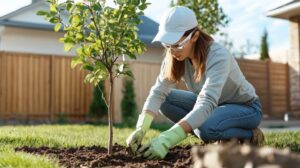
Planting a new tree should set the stage for years of healthy growth, but the truth is that many young trees struggle long before they reach maturity. In the Kingwood and Houston area, our soil conditions and weather patterns make proper planting even more important. When small details are missed at the beginning, those mistakes often show up later as weak growth, disease, or even complete failure. Understanding what can go wrong helps homeowners give their new trees the strong start they deserve.
Planting Too Deep Prevents Healthy Root Development
A tree that sits too deep in the ground has an uphill battle from the start. When the root ball is buried below the proper level, the upper roots do not get the oxygen they need. This leads to slow decline, poor anchoring, and a tree that never seems to grow as it should.
The top of the root ball should sit slightly above or even with the surrounding soil. If the trunk looks like it rises straight out of the ground with no visible flare, the tree is likely planted too deep. Over time, this can cause leaning, root rot, and early failure.
Root Flare Visibility Is a Must for Long Term Tree Health
The root flare is the area where the trunk widens at the base. This part of the tree should always be visible. When soil or mulch is piled around it, moisture stays trapped against the bark, which creates the perfect environment for decay and disease.
Many container grown trees arrive with too much soil over the flare. Before planting, that extra soil should be cleared away. This helps determine the correct planting depth and gives the tree room to breathe and grow naturally.
Too Many Soil Amendments Can Keep Roots From Spreading
It is tempting to fill the planting hole with rich, fluffy soil, but this approach can work against the tree. When the soil inside the hole feels drastically different from the native soil around it, the roots may decide to stay where conditions feel easier. This creates a small, contained root system with poor stability and limited access to water during dry spells.
Most new trees do best when the planting hole is backfilled with the existing soil. Small amounts of amendments can help in certain cases, but the goal is always to encourage roots to move outward into the natural soil that surrounds them.
Watering Habits Shape How Well a New Tree Establishes
The first two years are the most important years of a tree’s life. During this time, watering habits can determine whether the tree thrives or struggles. Too little water prevents the root ball from staying moist enough for new growth. Too much water can drown the young roots, especially in the clay heavy soils common in the Houston area.
New trees need slow, deep watering that reaches the full depth of the root ball. Quick sprays at the surface do not help the tree develop strong, deep roots. Most homeowners should expect to water two to three times per week at the beginning, adjusting for rainfall and heat.
Giving Trees the Start They Need
When new trees fail, it is rarely because the species was wrong, or the weather was too harsh. More often, the problem started on planting day. Proper depth, visible root flare, the right soil approach, and thoughtful watering can make the difference between a tree that barely survives and one that becomes a long-lasting part of your landscape.
Forest Tree Service LLC has helped homeowners plant and care for trees throughout Kingwood and Houston for more than 30 years. If you want your new tree to grow strong and healthy from the start, our team is ready to help with expert planting and ongoing care. Contact Forest Tree Service at 281-381-4125 today or visit us online for more information!